


The Hirsch Index, also known as the h-index, is a crucial indicator of the scientific productivity and impact of researchers and scholars. Currently, this metric is widely used in scientometrics to assess the significance of authors, scientific journals, organizations, and countries. In this article, we will delve into the essence of the Hirsch Index, its calculation methodology, and its significance in the scientific community.

Defining the Hirsch Index
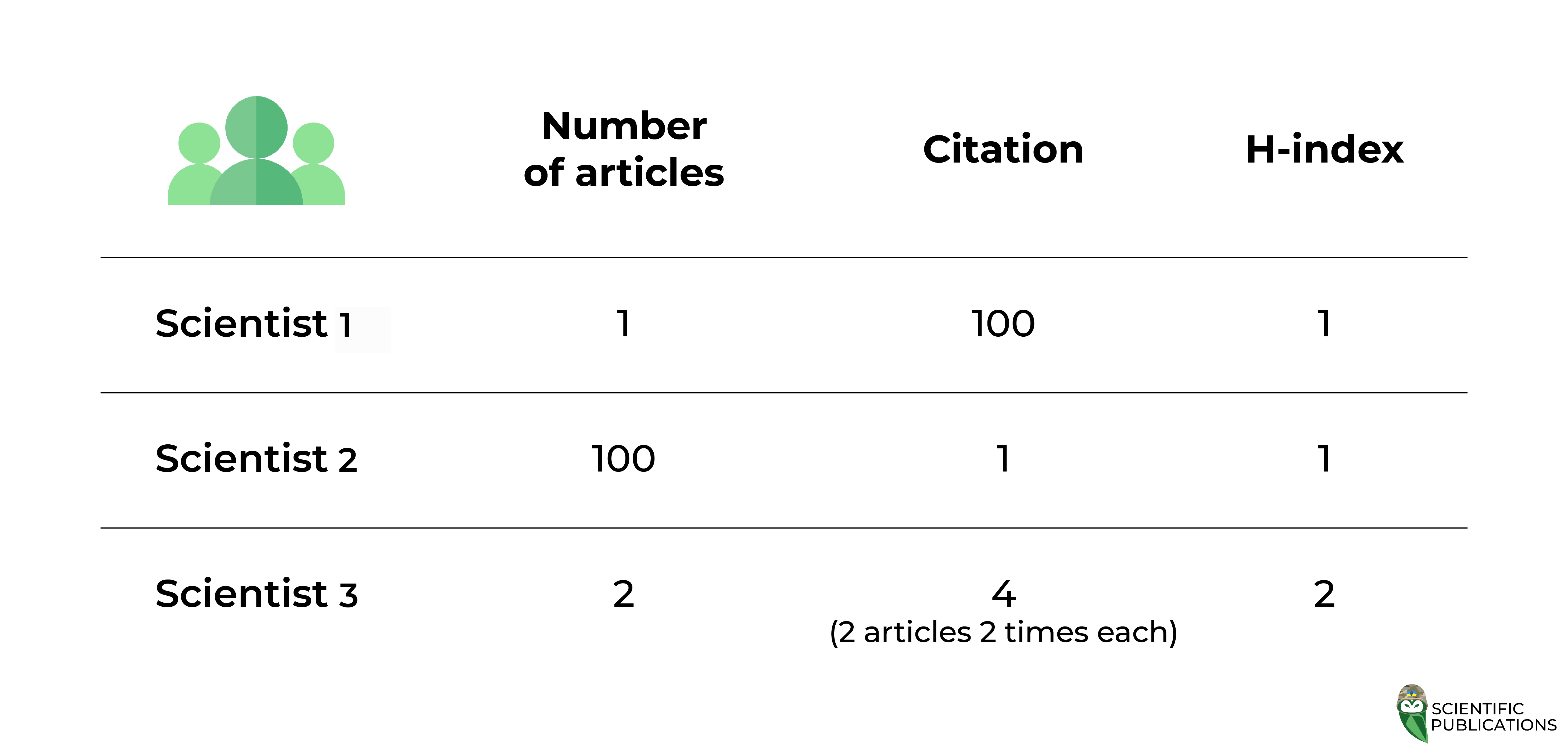
The Hirsch Index is a numerical measure based on the quantity of scientific publications and their citations. It was developed by the American physicist Jorge Hirsch in 2005. It is defined as the highest number, denoted as h, for which h publications by an author have received at least h citations. For instance, a researcher with an h-index of 10 has 10 publications, each of which has been cited at least 10 times.
Calculation Methodology
Calculating the Hirsch Index requires arranging an author's publications in descending order based on the number of citations. Then, it is necessary to determine the value of h, which represents the number of publications that have received at least h citations. The h-index is the largest number h for which h publications have garnered at least h citations. This metric reflects the scientific productivity and influence of an author.
Significance in the Scientific Community
The Hirsch Index has become a widely adopted indicator in the scientific community for evaluating the influence and scientific productivity of researchers and scholars. It allows for the comparison of achievements among authors within a specific field and identifies the most influential researchers. However, it should be noted that the Hirsch Index is not an exhaustive criterion for evaluating scientific productivity, and other factors such as publication quality and their impact on the scientific community should be taken into account.
The Hirsch Index serves as a significant metric that aids in assessing the scientific productivity and impact of researchers and scholars. This metric is widely applied in scientometrics and is utilized by services such as Scopus, Web of Science, and Google Scholar. Nonetheless, it is essential to consider the Hirsch Index in conjunction with other criteria for evaluating scientific productivity to obtain a more comprehensive picture of an author's impact.
By availing the "Hirsch index increase" service offered by "Scientific Publications," you will receive comprehensive support and expert assistance in achieving high levels of scientific productivity. Our team of experienced specialists in scientometrics will help boost your Hirsch Index.


